
As the demand for clean and sustainable energy intensifies, scientists and energy experts are turning their attention underground, to a little-known yet naturally occurring fuel source: geological/ natural hydrogen. Unlike manufactured fuels, geological hydrogen doesn’t need to be created, it only needs to be discovered. Its potential to support long-term, low-emission energy systems is beginning to capture serious interest, especially for countries like India with vast and diverse geology waiting to be explored.
What Is Geological Hydrogen?
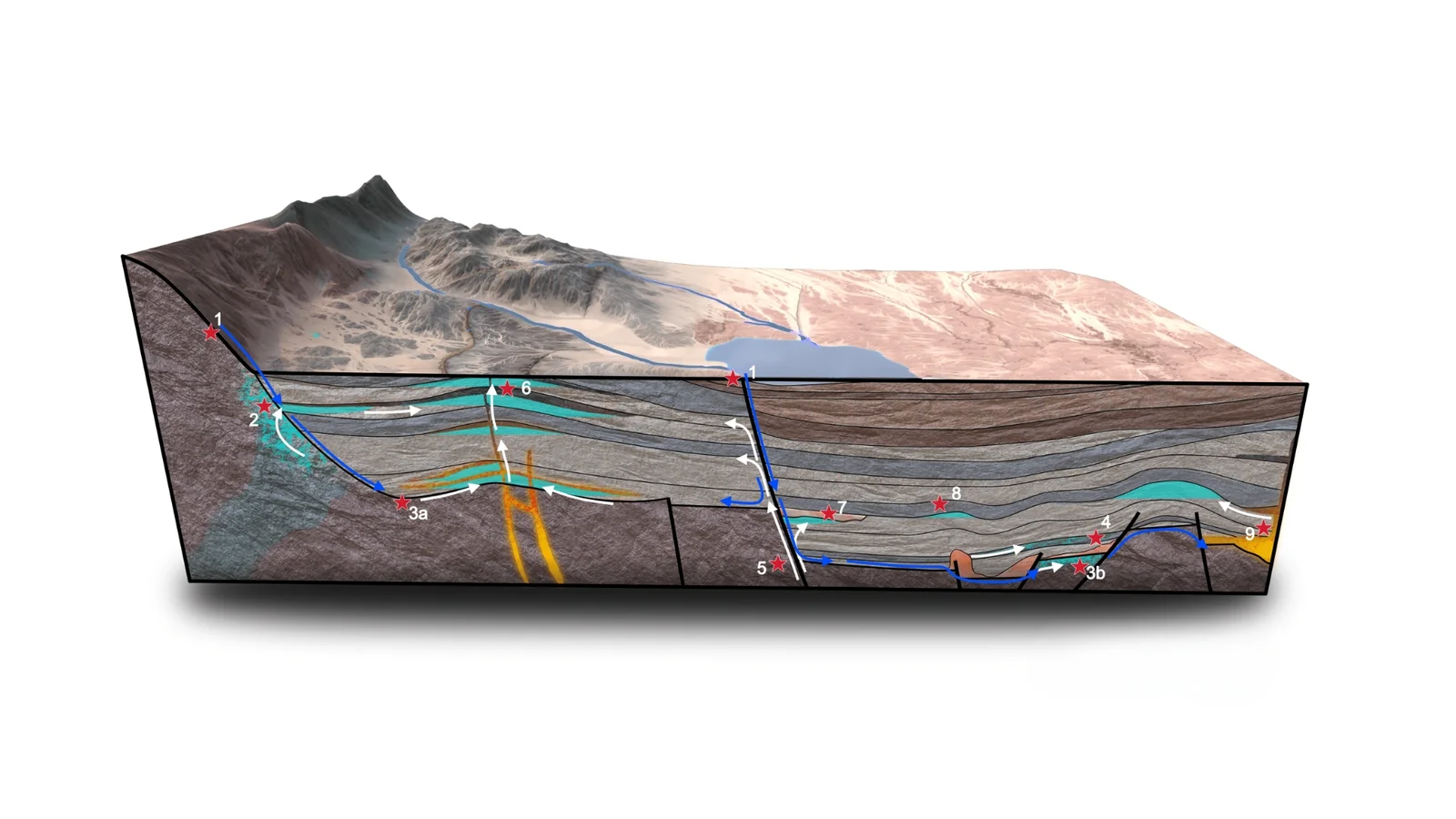
Geological hydrogen occurs naturally in the Earth’s crust. It is produced through long-standing geochemical reactions that require no external energy input and emit no carbon. The most prominent of these processes are:
- Serpentinization – A reaction between ultramafic rocks (like peridotites and dunites) and water, typically occurring in ophiolite complexes and subduction zones. This reaction produces molecular hydrogen (H₂) and heat, often sustaining subsurface microbial life.
- Radiolysis – The dissociation of water molecules due to natural radioactive decay of uranium, thorium, and potassium in granitic terrains. This generates H₂ over geological timescales and can accumulate in fractures or gas pockets.
- Iron oxidation, mantle degassing, and water-rock reactions in fault zones may also contribute.
These processes are continuous and often self-sustaining, raising the possibility that certain geological formations could act as natural hydrogen wells, not unlike natural gas fields, but cleaner.
Global Case Studies
Natural hydrogen exploration is gaining global momentum with several pilot and commercial scale initiatives underway. One of the earliest and most significant examples is the Bourakébougou field in Mali, which has provided uninterrupted hydrogen supply to a local village since 2011. This reservoir, over 8 km in diameter, comprises multiple high-purity hydrogen layers and demonstrates the feasibility of natural hydrogen as an energy source. In Spain, a confirmed deposit beneath the Pyrenees led to the establishment of Helios Aragón, aiming to extract 55,000–70,000 tonnes of hydrogen annually, comparable to outputs from conventional SMR plants. In Australia, more than 40 exploration licenses have been issued since 2021, with companies like Gold Hydrogen identifying reserves in Southern Australia that may contain between 1.3 and 8.8 million tonnes of hydrogen. The Bulqizë mine in Albania, a chromium site, emits approximately 200 tonnes of 84%-pure hydrogen each year, reinforcing ophiolites as viable reservoirs. Meanwhile, the Chimaera seeps in Turkey continue to release hydrogen and methane, having done so for millennia. These examples reflect a growing recognition of natural hydrogen as a scalable and economically viable contributor to the global energy transition.
Why India Should Care
India’s Precambrian cratonic regions like the Dharwar, Singhbhum, Bastar, and Aravalli cratons host vast sequences of ultramafic and granitic rocks. These are ideal candidates for:
- Serpentinization-driven hydrogen generation (in ophiolitic or metamorphosed mafic-ultramafic belts).
- Radiolytic hydrogen accumulation (in granite-rich terrains like Chhattisgarh or Rajasthan).
- Fault-zone hydrogen release (in active seismotectonic zones such as the Western Ghats or Himalayan foothills).
If surveyed and confirmed, these areas could become low-cost, zero-emission hydrogen production zones, significantly reducing the pressure on water, renewable power, and critical minerals required for Green Hydrogen.
Conclusion
India’s energy story might just lie beneath our feet. Geological hydrogen could serve as a bridge fuel, complementing Green Hydrogen and helping India in achieving its net zero goals.
The geology is here. The science is proven. The tools already exist. What’s needed now is a shift in narrative, from potential to policy.